
Dita
Alstonia scholaris
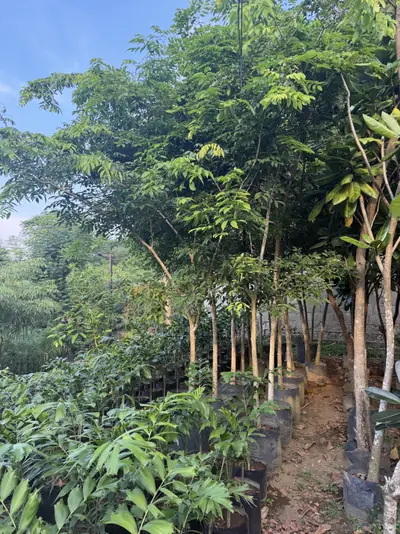
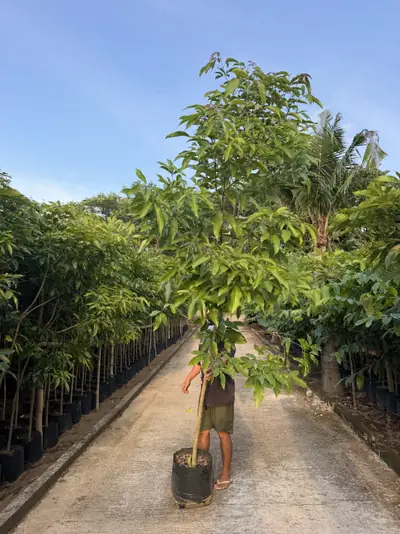
A native evergreen with a layered, architectural crown. Dita's leaves grow in whorls around the branch tips, and its branches spread in tiers, so even a young tree has a clean, structured shape. It stays green all year. We supply it nursery-grown in bags, from 8 ft to 16 ft.
Quick answer: Dita (Alstonia scholaris) is a native Philippine evergreen tree with whorled leaves and a tiered crown, used as a specimen and avenue tree.12 Dita's flowers have a strong scent, so it's best kept away from bedrooms and dining areas.2 Halamanan supplies nursery-grown Dita at ₱2,800 (8-10 ft) and ₱4,200 (11-16 ft) per tree as of November 2026, with a 20-tree minimum.
Pricing Guide (per tree)
| Size / Spec | Price (PHP) |
|---|---|
| Standard, 8-10 ft | ₱2,800 |
| Large, 11-16 ft | ₱4,200 |
Final pricing depends on project volume, delivery location, and current supply. Get a project-specific quote for accurate pricing.
- Minimum order: 20 trees, and mixing species from our list to reach it is fine
- Lead time: about 1 week from confirmed order
- Prices are tree only. Delivery and planting are quoted per project.
- Caliper is the trunk width measured 6 inches above the soil.
- Prices updated: November 2026
About Dita
Dita (Alstonia scholaris) is a native evergreen tree that grows wild across the Philippines, from Cagayan to Palawan and Mindanao, in forests at low and medium altitudes.1 Dita's glossy, leathery leaves come in whorls of 4 to 8, green on top and pale underneath.1 The branches come out in tiers from the trunk, which gives the crown its layered look.2
Dita's small greenish-white to cream flowers grow in clusters at the branch tips and are strongly fragrant.1 After flowering it produces long, thin, hanging seed pods, 20 to 40 cm long, that split open to release seeds.1
Dita is a tall tree in the wild and can grow fast. Plantation trees in Taiwan averaged about 23 m tall at 18 years.3 In landscapes it's usually pruned and kept much smaller, but it needs room to grow.
Common Applications
- Specimen tree for entrances, courtyards and lawns
- Evergreen avenue and roadside planting
- Mixed native screens, where its year-round leaves fill gaps left by trees that shed in the dry season
- Campus, park and estate common areas
Why Developers and Resorts Choose It
- It's native. Dita grows naturally throughout the Philippines.1
- It stays green. Dita doesn't drop its leaves in the dry season, unlike Molave, Tindalo or Banaba.
- It has a strong shape. Dita's tiered branches and whorled leaves look designed, even on young trees.
- It grows fast. Dita reaches useful size sooner than slow natives like Molave or Bitaog.3
Specifications
- Botanical name
- Alstonia scholaris
- Family
- Apocynaceae
- Local names
- Dita (Tagalog, Bikol), Bita, Tangitang (Bisaya), Lipauen (Ilocano), and others.1 Called blackboard tree, scholar tree or devil tree abroad.
- Native range
- South and Southeast Asia, including the Philippines, to northern Australia4
- Sizes we supply
- 8-10 ft and 11-16 ft
- Growth rate
- Moderate to fast
- Foliage
- Evergreen
- Sun
- Full sun
- Water
- Regular watering through the dry season, especially when young3
- Soil
- Wide range, including alluvial and sandy soils3
- Salt tolerance
- Not rated. Keep Dita away from frontline coastal spots.
- Pool safe
- Not ideal. Dita drops flowers and seed pods, and its milky sap irritates skin.
- Setback from structures
- At least 6 m from buildings, given its mature size
Things to Know Before You Plant Dita
The flower scent
Dita’s flowers have a strong, heavy scent. Some people love it. Others find it overpowering, and NParks Singapore notes it can cause sensitivities in some people during heavy flowering.2 In India, where it blooms in October and November, people living near the trees report headaches, nausea and allergy symptoms during flowering season.5
For that reason we suggest planting Dita away from bedroom windows, hotel rooms and outdoor dining areas. It works well on avenues, in parks and in large grounds.
The sap
Cut or broken Dita branches release a milky latex.2 It’s an irritant, so crews should wear gloves when pruning.
Typhoons
Dita has soft wood.6 In strong storms it tends to shed its branches rather than fall over, leaving the main trunk standing, then grows a new crown from it.6 That makes it a survivor, but falling branches can damage roofs, cars and people. Keep Dita away from parking areas and rooflines, and prune out weak branches before the wet season.
Planting & Establishment
Site preparation
- Dig the hole 2 to 3 times wider than the bag and no deeper than the root ball.
- Mix compost into poor or compacted soil.
- Choose a spot with room for a tall Dita, clear of power lines.
Planting
- Remove the bag carefully without breaking the root ball.
- Set the tree so the top of the root ball sits level with the ground.
- Backfill, firm the soil and water deeply.
- Stake on windy sites.
First year care
- Water 2 to 3 times a week for the first month, then regularly through the dry season.
- Mulch around the base, keeping it off the trunk.
We handle supply, delivery, planting and staking as one job if you need it.
Ongoing Maintenance
- Pruning: Keep a single strong Dita trunk and remove weak or crossing branches. Wear gloves because of the sap.
- Fertilizing: Light feeding at the start of the wet season.
- Pests: A leaf skeletonizer caterpillar can damage young trees.3 Check new leaves regularly during the first year.
- Litter: Expect fallen flowers and seed pods under the crown.
For an evergreen partner in a native planting, see Balitbitan. For native trees that thin out in the dry season, see Molave and Tindalo.
We plant and install this
Halamanan supplies and installs Dita as part of our landscape design and landscape construction projects. We source the plants, place them in the design, and plant them with the rest of the garden.
Sourcing & Supply
Origin
Our Dita is nursery-grown in bags. It isn't collected from the wild.
Quality Control
Every tree is checked for form and root ball condition before it leaves the nursery. For orders of 20 or more, we send photos of the batch before delivery.
How to Order
- 1
Inquiry to Quote
Send us your specs and project size. We respond with a project-specific quote within 24 hours.
- 2
Site Visit / Spec Confirmation
For larger projects, we coordinate a site visit or spec call to confirm requirements.
- 3
Order Confirmation + Deposit
50% deposit confirms your order. Established institutional accounts may qualify for net terms.
- 4
Production / Sourcing & Delivery
We coordinate sourcing, production, and delivery. Final payment due on delivery.
- Response time
- We respond within 4 business hours.
- Payment terms
- 50/50 standard. Net terms available for established institutional accounts.
- Documentation
- Sales Invoice, Delivery Receipt, COA-compliant documentation on request.
Frequently Asked Questions
How much does a Dita tree cost in the Philippines?
A Dita tree costs ₱2,800 at 8-10 ft (1.5 in. caliper, 12 in. bag) and ₱4,200 at 11-16 ft (2-2.5 in. caliper, 18 in. bag), as of November 2026. Prices are tree only. Delivery and planting are quoted per project.
Is Dita native to the Philippines?
Does Dita stay green all year?
Yes. Dita is evergreen, which makes it a good partner for native trees that thin out in the dry season.
Is the Dita flower smell a problem?
How tall does Dita grow?
Is Dita safe in a typhoon?
Dita usually survives a typhoon by shedding branches rather than falling over, but those branches can cause damage.6 Keep Dita away from parking and rooflines, and prune before the wet season.
Is Dita sap dangerous?
Dita's milky sap irritates skin.2 Wear gloves when pruning.
What's the minimum order for Dita?
Dita orders start at 20 trees. You can mix Dita with other species on our list to reach the 20.
How long does Dita delivery take?
Dita delivery takes about 1 week from confirmed order, depending on your location.
What does your 30-day establishment guarantee cover?
The 30-day establishment guarantee covers nursery-side failures on every Dita tree we supply. If a properly installed tree (planted by us or per our written planting protocol) fails within 30 days because of root ball damage, undisclosed disease or transport stress, we replace it free. Failures from improper post-planting care, weather events or vandalism are not covered.
Sources
- Dita: Alstonia scholaris. StuartXchange. https://www.stuartxchange.org/Dita ↩
- Flora & Fauna Web: Alstonia scholaris. National Parks Board Singapore. https://nparks.gov.sg/florafaunaweb/flora/2/7/2705 ↩
- Agroforestree Database: Alstonia scholaris. World Agroforestry. https://apps.worldagroforestry.org/treedb/AFTPDFS/Alstonia_scholaris.PDF ↩
- Plants of the World Online: Alstonia scholaris. Royal Botanic Gardens, Kew. https://powo.science.kew.org/taxon/urn:lsid:ipni.org:names:60445977-2 ↩
- What's that October devilish smell, Delhi? (article and reader reports). Delhi Greens. https://delhigreens.com/2010/10/26/whats-that-october-devilish-smell-delhi/ ↩
- Alstonia scholaris (Milkwood). Some Magnetic Island Plants. https://somemagneticislandplants.com.au/milkwood ↩
Ready to spec Dita for your project?
Send us your project details. We respond within 4 business hours.