
Breeze Blocks
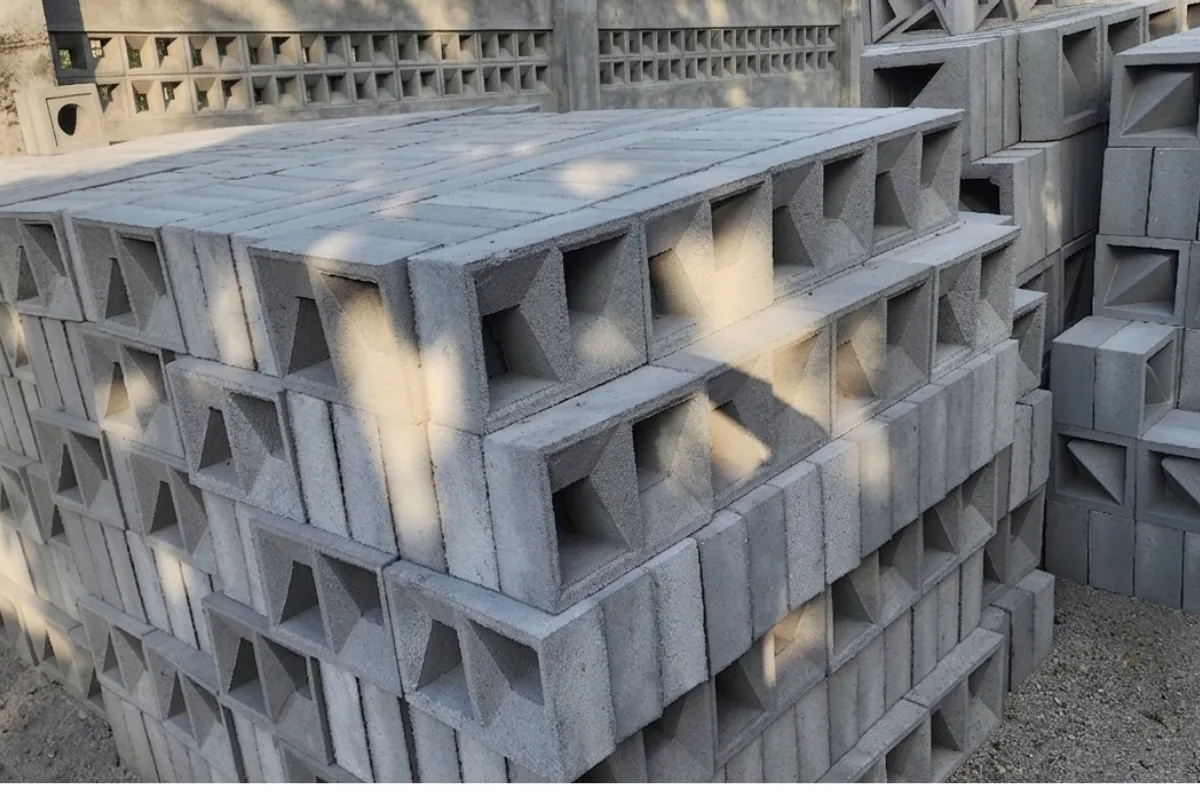
Decorative concrete screen blocks in 10 curated patterns. From ₱135 per piece VAT inclusive, delivered across Laguna, Cavite, Batangas, Rizal, Bulacan, and Metro Manila. Supply only, or supplied and installed by our own crews.
- Direct from
- Established Philippine precast manufacturer
- Delivery
- Laguna, Cavite, Batangas, Rizal, Bulacan, Metro Manila
- BIR-registered
- supplier
Pricing Guide
-
12-inch square (12 x 12 x 3.5 in)
₱235 /pc
11 pieces per sqm. Pattern: Alon
Large-format, lowest cost per sqm
-
Rectangular (390 x 190 x 90 mm)
₱190 /pc
14 pieces per sqm. Patterns: Bituin, Sinag, Bintana, Ulap, Arko, Buwan
Ventilation format, laid like oversized bricks
-
8-inch square (8 x 8 x 3.5 in)
₱135 /pc
25 pieces per sqm. Patterns: Araw, Kwadro, Kislap
Small-format, for accents and tight spaces
All blocks are natural grey concrete and take ordinary masonry paint. Prices are VAT inclusive with official receipt, ex our supply point. Delivery is quoted per trip based on your location and volume. More patterns are available for volume and project orders.
Specifications
- Material
- Precast concrete
- Standard sizes
- 8 and 12 inch square; 390 x 190 x 90 mm rectangular
- Coverage
- 11 to 25 pieces per sqm depending on size
- Patterns
- 10 curated, more on request
- Finish
- Natural grey concrete, paintable
- Load-bearing
- No. Requires a reinforced concrete frame.
- Lead time
- Ex-stock for standard orders; about 30 days for 1,000+ pieces
Breeze blocks are decorative concrete blocks with patterned openings, used for fences, pool screens, laundry walls, and any wall that needs privacy without losing airflow. We supply 10 curated patterns, precast by an established Philippine manufacturer, with delivery across Laguna, Cavite, Batangas, Rizal, Bulacan, and Metro Manila, and installation by our own crews.
Prices run from ₱135 to ₱235 per piece depending on size, VAT inclusive. Most residential screen walls need 11 to 25 pieces per square meter depending on block size. Standard orders ship from stock; volume orders of 1,000 pieces or more are cast to order on roughly a 30-day lead. Delivery is quoted per trip based on your location and volume, the same way our garden soil delivery works.
What a square meter actually costs
Per-piece prices mislead when block sizes differ, so here is the materials cost per square meter of screen:
| Series | Cost per sqm (blocks only) |
|---|---|
| 12-inch square | ₱2,585 |
| Rectangular | ₱2,660 |
| 8-inch square | ₱3,375 |
The pricing follows the wall, not the piece: a square meter costs roughly the same whichever large-format pattern you pick. The exception is the 8-inch series, which needs 25 pieces to fill the same area, with the extra casting, handling, and laying that implies. Use the small blocks where they are seen up close, and the large formats for long runs.
Mortar, stiffener columns, and labor are on top of this. Send us your wall length and height for a supplied-and-installed quote.
The patterns
We curated 10 patterns from the dozens still being cast in the Philippines, chosen for how they read in a full wall, not just as a single block. A pattern that looks intricate in your hand can turn busy across 10 meters, and a plain one can look severe. These 10 lean clean and geometric, which is where Philippine residential design sits right now:
Alon (12-inch)
A large-format quarter-circle arc, the classic mid-century silhouette. Stack it rotated for waves, fans, or full circles. Fewer, bigger blocks means faster laying, fewer joints, and the lowest cost per square meter in the catalog.
Araw, Kwadro, and Kislap (8-inch)
Small-format patterns for accent bands, planter surrounds, and tight spaces. Araw is a sun ring in a square, Kwadro is a clean four-frame grid, and Kislap is a diamond in a square frame. Small blocks cost the most per square meter, so spend them where they are seen up close.
Bituin, Sinag, Bintana, Ulap, Arko, and Buwan (rectangular)
The ventilation format, laid like oversized bricks. Bintana, four clean slots, is our most-ordered pattern: it reads modern in a long run and lays fast. Bituin is a four-pointed star, Sinag is rays over arches, Ulap is soft rounded slots, Arko is a triple arch, and Buwan is a single bold oval. Mixed in one wall, Bintana runs with a Bituin or Buwan accent course look intentional rather than busy.
Breeze blocks are not a trend import. They were on every school corridor, church wall, and laundry area in the country through the 60s and 70s, cast from molds that have been in continuous use for decades. What changed is that architects started photographing them again.
Why breeze blocks are back
This is a hot country, and a solid wall blocks the breeze exactly where you want it most. A patterned screen gives you privacy at an angle: someone walking past your fence never gets a clean line of sight, but air moves through, light comes in dappled instead of blocked, and the wall casts shifting shadow patterns across your floor through the afternoon. On a small lot, that difference decides whether a garden feels like a garden or a stairwell.
Quality: what to check before buying any breeze block
Breeze blocks are cast in yards all over the country and quality varies more than price does. The two failure points are curing and dimension. Under-cured blocks chip at the edges during handling and hairline-crack after installation, and you cannot see under-curing in a photo; you see it 3 months after the wall is built. Dimensional variance is the other problem: in a screen wall every block is visible, so a few millimeters of difference per piece accumulates into visibly crooked pattern lines.
This is why we supply from an established precast manufacturer rather than the cheapest listing. Machine-batched concrete and proven molds beat a tarpaulin-roofed yard on consistency every time. Marketplace listings at ₱40 to ₱90 per piece exist, and some are fine, but you are gambling on curing you cannot inspect. For a market-wide reference on sizes, patterns, and the full price range across suppliers, see the breeze block guide on Groundwork, our sister materials library for architects and builders.
One habit we follow on every install and recommend to every mason: dry-lay a full course before mortar. It catches variance before it becomes a crooked wall.
Where breeze blocks work best
Fences.
The most common build: solid CHB to waist or chest height for security, breeze blocks above that for light and air. You keep a deed-restriction-friendly height and lose the prison-wall feeling.
Pool screens.
A solid wall kills the breeze over the water. A breeze block screen blocks the neighbor's sightline and keeps air moving across the deck. Our pool landscaping guide covers the full privacy playbook.
Laundry and dirty kitchen walls.
These spaces need ventilation by design, which is why breeze blocks were always the default material here. Bintana and Ulap are the practical choices for service areas.
Carport and garage screens.
Separate the carport from the garden visually without trapping exhaust and heat.
Garden feature walls.
A short breeze block wall behind a planting bed, with a light climber like cadena de amor threaded through the openings, turns a screen into a green wall in one season.
Breeze blocks handle the vertical plane. For the ground underneath them, our cobblestone pavers Philippines line is natural stone quarried in Rizal, in black and white, and the small-format 4x4 suits the same courtyard and service-area footprints these screens usually enclose.
Installation
Your own mason can lay breeze blocks; the skills are ordinary Filipino masonry. The structure matters more than the laying: breeze blocks are not load-bearing, so the wall needs a reinforced concrete frame, meaning a proper footing, stiffener columns at regular spacing, and a top beam. Never use breeze blocks to carry a roof or slab.
If you want it handled end to end, our crews build the complete wall: footing, columns, block laying, and finishing, across our core service area of Laguna, Cavite, and Metro Manila. We deliver blocks more widely than we install, reaching Batangas, Rizal, and Bulacan as well.
Two rules to settle before you build. Fences up to 1.8 meters fall under a simple fencing permit; above 1.8 meters you are in building permit territory under the National Building Code, and your subdivision's deed restrictions may be stricter than the LGU. Check both before pouring anything.
Planning your order: lead times
Standard residential quantities ship from stock. Volume orders of roughly 1,000 pieces or more are cast to order, and concrete curing does not rush: allow about 30 days.
Here is why that lead time matters less than it sounds. Look at your construction sequence: after groundbreaking, your contractor spends 3 to 5 weeks on excavation, footings, stiffener columns, and CHB base courses before a single breeze block is needed. Order your blocks the week the footing starts and the casting runs concurrent with the site work. Architects and builders already source this way; if you are a homeowner managing your own build, put the block order at the start of the schedule, not the week the mason asks for them.
How to order
- Send your wall length, height, and city, or a sketch or photo of the site, through the quote form.
- We confirm pattern availability, price, and delivery cost.
- Blocks only: pay and we schedule delivery. Supplied and installed: we set a site visit for the final quote.
Procurement FAQ
How much do breeze blocks cost in the Philippines?
From our stock, ₱135 to ₱235 per piece VAT inclusive, depending on size. Across the wider market, designer breeze blocks run roughly ₱110 to ₱400 from established suppliers, with marketplace listings as low as ₱40 to ₱90 for blocks of unverifiable curing quality.
How much does a breeze block wall cost in the Philippines?
In blocks alone, a typical 10 square meter screen section costs about ₱26,000 to ₱34,000 depending on the series, or ₱2,585 to ₱3,375 per square meter. The installed cost adds the reinforced concrete frame, mortar, and labor, which vary by site conditions and wall height, so send your wall length and height for a supplied-and-installed quote.
How many breeze blocks do I need per square meter?
11 pieces for 12-inch blocks, 25 for 8-inch, and 14 for the rectangular series. Multiply by your screen area and add 5 percent for cutting and breakage.
Are breeze blocks load-bearing?
No. They are screen walls. The structure comes from a reinforced concrete frame: footing, stiffener columns, and a top beam carry the load, the blocks fill the frame.
Can a regular mason install breeze blocks?
Yes, it is standard masonry. The one habit that matters: dry-lay a full course before mortar, because pattern misalignment is visible in a screen wall in a way plain CHB never is.
Do breeze block walls need a permit?
Fences up to 1.8 meters fall under a simple fencing permit. Taller than that requires a building permit, and subdivision deed restrictions may impose stricter limits than your LGU. Check both.
What colors are available?
All blocks come in natural grey concrete and take ordinary masonry paint over a neutralizer, the same as CHB. White and warm off-whites show the shadow patterns best. In pool splash zones, paint or seal them, since raw concrete grows algae faster there.
How long is the lead time?
Standard quantities ship from stock. Orders of about 1,000 pieces or more are cast to order on roughly a 30-day lead, so place volume orders when site work begins, not when the mason needs them.
Do you have other patterns besides the 10 shown?
Yes. We curated these 10 for residential walls, but more molds are in production for volume and project orders. Tell us the look you are after and we will send options.
Where do you deliver?
Across Laguna, Cavite, Batangas, Rizal, Bulacan, and Metro Manila, quoted per trip based on distance and load. Provinces farther out are case by case for volume orders.
Request Project Quote
For procurement officers, architects, and developers. We respond within 4 business hours.
Quick Facts
- Origin
- Established Philippine precast manufacturer
- Typical Lead Time
- Ex-stock for standard residential quantities. About 30 days for volume orders of 1,000 pieces or more, cast to order.
- Minimum Order
- No minimum for stock patterns. Volume and project orders cast to order at 1,000+ pieces.
- Delivery
- Laguna, Cavite, Batangas, Rizal, Bulacan, Metro Manila
- Category
- Tiles & Bricks
Related Materials
Ready to spec your project?
Send us your project details. We respond within 4 business hours.