Maki (Podocarpus)
Podocarpus macrophyllus
Also known as: Podocarpus, Buddhist Pine, Yew Plum Pine, Kusamaki
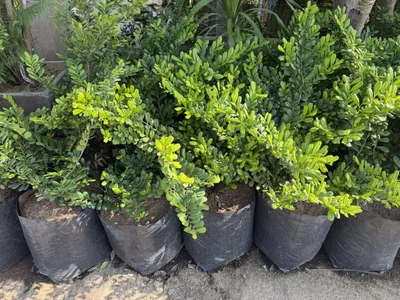
The slow-growing, dense, dark-green conifer sold across PH nurseries as 'Maki' for formal hedges, columns, and topiary. Botanically Podocarpus macrophyllus, native to southern China, Taiwan, and Japan. The slow growth is the selling point: it holds a clipped shape for months, tolerates salt and drought, and stands up to typhoons. It is also why it costs what it costs, because you are paying for the grower's years. ₱600 to ₱1,800 per plant.
Pricing Guide (per plant)
| Size / Spec | Price (PHP) |
|---|---|
| 4-5 ft | ₱600 |
| 6-8 ft | ₱1,800 |
Volume Discounts
- 50+ plants:Volume pricing on formal hedge runs, quoted per project
Plant material only. Because Maki grows slowly, roughly 15-30 cm a year, larger sizes carry premium pricing and a lead time: a 6-8 ft plant represents years of a grower's time that cannot be rushed. Buy at or near your target height rather than expecting small plants to fill in. Delivery and installation are quoted per project.
Request Project Quote →About Maki (Podocarpus)
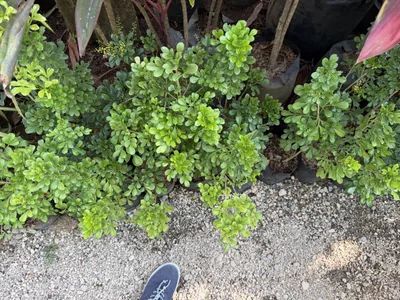
Maki is the quiet luxury of Philippine hedging. Where eugenia announces itself with red flushes, Maki offers deep green, fine-textured, needle-like foliage that reads formal and architectural. Most PH buyers know it as 'Maki' (from the Japanese kusamaki); nurseries and landscapers also list it botanically as podocarpus, or shorten it to 'podo.' Botanically it is Podocarpus macrophyllus, the Buddhist pine or yew plum pine, a slow-growing evergreen conifer native to southern China, Taiwan, and southern Japan. The slow growth is the entire point: a Maki hedge holds its shape for months between trims, and mature specimens carry real presence and real market value. One thing to be clear about, because the trade blurs it: the hedge Maki sold everywhere here is the imported Podocarpus macrophyllus. It is not Podocarpus costalis, the genuine Philippine-native podocarp, which is a different and much scarcer plant.
Common Applications
- Formal hedges and privacy screens. The premium formal hedge for high-end residential and commercial projects, where a crisp clipped line matters.
- Columnar accents. Flanking gates, doors, and driveways. Its narrow upright habit suits planters and side yards under 1 m wide.
- Topiary and clipped forms. Slow growth plus tolerance of hard pruning makes it a topiary and bonsai favourite. It buds back from old wood.
- Poolside and courtyard planting. Clean habit, low litter, and non-invasive roots, so it can sit close to hardscape and pool edges.
- Coastal and typhoon-exposed sites. Highly salt-tolerant, and local growers report it stands up to typhoons unusually well.
- Low-maintenance architectural planting. Two or three light shearings a year hold a formal shape, against every 4-8 weeks for a fast hedge.
Where You'll See It
- Premium residential formal hedges and clipped walls
- Columnar accents flanking gates and entrances
- Corporate and commercial frontages
- Poolside, courtyard, and narrow side-yard planting
- Topiary and feature specimens in high-end gardens
- Coastal and windward boundary planting
Why Architects Choose It
- Slow, self-holding form means less trimming and a shape that stays crisp for months
- Narrow columnar habit fits side yards and planters under 1 m wide
- Highly salt-tolerant, which extends it into coastal and exposed sites
- Typhoon-hardy per local grower experience, which matters on windward boundaries
- Non-invasive roots, so it can sit close to walls, paving, and pool edges
- Formal, architectural texture that suits contemporary and high-end designs
Project Types Best Suited
- Premium residential landscaping
- Formal hedges, columns, and topiary
- Corporate and commercial frontages
- Poolside and courtyard planting
- Coastal and typhoon-exposed sites
- Contemporary architectural landscaping
Specifications
- Botanical name
- Podocarpus macrophyllus (Thunb.) Sweet
- Family
- Podocarpaceae
- Common hedge form
- Podocarpus macrophyllus var. maki, the compact cultivated form the trade sells for hedging
- PH trade names
- Maki, Podocarpus, 'podo', Buddhist Pine
- Native range
- Southern China to northern Myanmar, Taiwan, and south-central and southern Japan
- Status in PH
- Introduced ornamental. Distinct from the PH-native Podocarpus costalis (arius), which is a different and much scarcer plant
- Habit
- Slow-growing evergreen conifer; dense, narrow, upright
- Height
- Commonly 8-15 ft as a hedge or column; the species can reach 20 m untrimmed
- Foliage
- Linear-lanceolate, leathery, dark green, spirally arranged; fragrant when bruised
- Growth rate
- Slow, roughly 15-30 cm per year. This is why it holds a formal shape, and why it is expensive
- Sun
- Full sun to partial shade. Full sun gives the densest growth, but it tolerates lower light better than most hedge plants
- Water
- Moderate. Drought-tolerant once established, but it will not forgive soggy roots
- Soil
- Well-drained is non-negotiable; slightly acidic preferred. Amend heavy clay before planting
- Salt tolerance
- High. Suits coastal and exposed sites
- Wind
- Typhoon-hardy per local grower experience; used as a windbreak on exposed boundaries
- Toxicity
- Toxic to dogs, cats, and horses. The ASPCA lists it as 'Yew Pine' (Podocarpus macrophylla, also Buddhist pine), toxic principle unknown, clinical signs severe vomiting and diarrhoea. Keep fallen fruit and clippings picked up
- Pet safe
- No. Stronger than the 'mildly toxic' most nursery listings give it: the ASPCA records severe vomiting and diarrhoea
- Trimming
- Two or three light shearings a year hold a formal shape. Buds back readily from old wood, so it forgives hard pruning
- Pool safe
- Yes. Clean, low-litter habit and non-invasive roots
Maki (Podocarpus) Supplier in the Philippines
Maki is the quiet luxury of Philippine hedging. Where eugenia announces itself with red flushes, Maki offers deep green, fine-textured, needle-like foliage that reads formal and architectural.
Most PH buyers know it as “Maki” (from the Japanese kusamaki). Nurseries and landscapers also list it botanically as podocarpus, or shorten it to “podo.” Same plant: Podocarpus macrophyllus, a slow-growing evergreen conifer native to southern China, Taiwan, and southern Japan.1
The slow growth is the point. A Maki hedge holds its shape for months between trims. It is also why it costs what it costs.
We supply it at ₱600 to ₱1,800 per plant.
An Honest Note: There Are Two Different “Podocarpus”
This one matters, because the trade blurs it and a spec sheet will not.
The hedge Maki sold in every PH nursery is the imported Podocarpus macrophyllus from East Asia. It is not the same plant as Podocarpus costalis (locally “arius”), which is a genuine Philippine native: a coastal podocarp from northern cliffs and the Batanes area. Kew records P. costalis as native to the Philippines, and the IUCN Red List assesses it as Endangered.2
Some PH nurseries file the imported hedge maki under “Philippine indigenous plants,” which muddies it further and is how the confusion spreads.
So: if a project brief calls for a native podocarp specifically, the plant is P. costalis, and it is a different, scarcer, and threatened species. That is not what a nursery hands you when you ask for maki. We flag it up front rather than let a native-spec brief get quietly filled with an import.
This page is the common imported hedge Maki. If you need the native, say so and we will tell you honestly what is available.
Why the Slow Growth Is the Selling Point
Maki grows roughly 15-30 cm a year. Most hedge plants treat that as a defect. For formal work it is the whole value proposition:
- A clipped shape stays clipped for months, not weeks.
- Two or three light shearings a year hold a formal wall, against every 4-8 weeks for a fast hedge like eugenia.
- Topiary and columns actually hold their geometry instead of blurring out between visits.
The trade-off is money and patience. Every plant represents years of a grower’s time, so tall specimens are expensive and stock at any given height is genuinely finite. Buy at or near your target height. A 4 ft Maki does not become a 7 ft Maki on any timescale a client will accept.
Growing Conditions in the Philippines
- Sun: full sun to partial shade. Full sun produces the densest growth, but Maki tolerates lower light better than most hedge plants, which is why it works in side yards and against walls.
- Water: moderate. Established plants are drought-tolerant. Maki dislikes waterlogged soil and will not forgive soggy roots, which is the most common way people kill it here.
- Soil: well-draining is non-negotiable, slightly acidic preferred. Amend heavy clay before planting.
- Salt: high tolerance, so it extends into coastal and exposed sites.
- Wind: local growers consistently report it stands up to typhoons well, which is why it turns up on windward boundaries.
- Pets and children: see the toxicity note below. Keep fallen fruit and clippings picked up around dogs, cats, and small kids.
The Honest Bit: Maki Is Toxic, and More So Than the Trade Admits
Most PH listings describe Maki as “mildly toxic,” usually mentioning only the seeds. That understates it.
The ASPCA lists this plant as “Yew Pine” (Podocarpus macrophylla, also filed under Buddhist pine, which is how you know it is the same plant) and records it as toxic to dogs, cats, and horses. The toxic principle is listed as unknown; the clinical signs are severe vomiting and diarrhoea.3
“Severe” is the ASPCA’s word, not “mild.” We would rather quote them than the nursery trade.
In practice: keep fallen fruit and clippings picked up, and in a pet household site Maki out of easy reach. For reachable positions, use a plant with a confirmed clean bill of health: the ASPCA lists santan (Ixora coccinea) and palmera (Dypsis lutescens) as non-toxic to both dogs and cats.
How It Compares to Eugenia
The real buyer decision in PH premium hedging is Maki against eugenia:
| Maki (Podocarpus) | Eugenia (Red Top) | |
|---|---|---|
| Growth | Slow, 15-30 cm/yr | Fast, closes in 12-18 months |
| Look | Formal, architectural, dark green | Soft, colourful, red new growth |
| Trimming | 2-3 light shearings a year | Every 4-8 weeks |
| Holds shape | For months | For weeks |
| Price | Premium, you pay for the years | Cheaper per plant |
| Salt / typhoon | High tolerance, typhoon-hardy | Not documented as salt-tolerant |
| Native to PH | No, East Asian import | Yes |
Pick Maki for a formal, low-maintenance, long-term wall, or where salt and wind are in play. Pick eugenia for fast coverage, colour, and lower cost, or where a native-spec brief has to be satisfied.
Pricing
Plant material only:
| Size | Price |
|---|---|
| 4-5 ft | ₱600 |
| 6-8 ft | ₱1,800 |
Larger sizes carry premium pricing and a lead time, because slow growth means a tall plant is years of a grower’s time. Delivery and installation are quoted per project.
Care Highlights
- Trimming: two or three light shearings a year. Do not over-cut; anything you remove takes months to grow back.
- Water: moderate, and drain the site properly. Soggy roots are the main killer.
- Feeding: light. A balanced fertilizer in the growing season is enough.
- Recovery: buds back readily from old wood, so a shape that gets away from you can be cut back hard and rebuilt.
Sources
Footnotes
-
World Checklist of Vascular Plants (WCVP), Royal Botanic Gardens, Kew, and NC State Extension Plant Toolbox, “Podocarpus macrophyllus var. maki.” Accepted name Podocarpus macrophyllus (Thunb.) Sweet. Native range southern China to northern Myanmar, Taiwan, and south-central and southern Japan. Highly salt- and drought-tolerant; leathery dark green leaves, fragrant when bruised; slow growth; used as hedge, screen, container, and topiary. Accessed 2026. https://plants.ces.ncsu.edu/plants/podocarpus-macrophyllus-var-maki/ ↩
-
Podocarpus costalis C.Presl, the Philippine-native podocarp (“arius”). Native range per Kew’s World Checklist of Vascular Plants: the Philippines, Taiwan, and the Nansei-shoto. Global IUCN Red List assessment: Endangered. Accessed 2026. https://www.gbif.org/species/5285927 ↩
-
ASPCA, Toxic and Non-Toxic Plants list, “Yew Pine (Podocarpus macrophylla),” additional common name Buddhist pine. Toxic to dogs, cats, and horses. Toxic principle: unknown. Clinical signs: severe vomiting and diarrhoea. (“macrophylla” is an orthographic variant of macrophyllus; Kew’s WCVP resolves it to Podocarpus macrophyllus (Thunb.) Sweet, and the “Buddhist pine” alias confirms the plant.) Accessed 2026. https://www.aspca.org/pet-care/animal-poison-control/toxic-and-non-toxic-plants/yew-pine ↩
We plant and install this
Halamanan supplies and installs Maki (Podocarpus) as part of our landscape design and landscape construction projects. We source the plants, place them in the design, and plant them with the rest of the garden.
Sourcing & Supply
Origin
Sourced as nursery-grown Maki from Luzon growers. Tall and full specimens are slow to produce by definition, so lead time and premium pricing apply to anything above 6 ft.
Supplier Relationship
Working relationships with growers who carry Maki at hedging sizes. Because the plant takes years to reach sellable height, stock at any given size is genuinely finite: when a grower's 6-8 ft plants are gone, they are gone for a season, not a week.
Quality Control
We confirm the plant is the imported hedge Maki (Podocarpus macrophyllus) and match specimens for height and density on column and hedge orders, where a mismatched plant in a formal line is impossible to hide. If a brief specifically calls for the PH-native podocarp, Podocarpus costalis, we flag it up front, because that is a different, scarcer, and IUCN-listed plant and it is not what a nursery hands you when you ask for maki.
Frequently Asked Questions
What is the Maki plant?
Maki is the PH trade name for Podocarpus macrophyllus, a slow-growing dark-green conifer used for formal hedges, columns, and topiary. The name comes from the Japanese kusamaki. It is also listed botanically as podocarpus, shortened to 'podo' in the trade, and known abroad as Buddhist pine or yew plum pine.
Is Maki the same as podocarpus?
Yes, for the hedge plant. 'Maki' is the everyday PH name and 'podocarpus' is the botanical genus, and the trade uses both interchangeably for Podocarpus macrophyllus. The catch is that the genus contains other species, including one native to the Philippines, so 'podocarpus' on its own is less precise than it sounds.
Is Maki the same as the Philippine-native podocarpus?
No, and this trips people up. The common hedge Maki is the imported Podocarpus macrophyllus from East Asia. The Philippine native is Podocarpus costalis, locally 'arius', a coastal species from northern cliffs and Batanes that Kew records as native to the Philippines and the IUCN Red List assesses as Endangered. It is scarce and rarely in the ornamental trade. If your brief needs a native podocarp, it is P. costalis, not the hedge Maki, and you should specify it explicitly.
How fast does Maki grow?
Slowly, roughly 15-30 cm per year. For a formal hedge that is a feature, not a flaw: it means less trimming and a shape that stays crisp. But it also means you should buy at or near your target height rather than buying small plants and waiting. A 4 ft Maki will not become a 7 ft Maki quickly.
Why is Maki more expensive than eugenia?
Slow growth. Every plant takes years longer to reach sellable size, so you are paying for the grower's time, not a markup. Tall specimens especially command premium pricing, and stock at any given height is genuinely finite. Eugenia gets you a hedge faster and cheaper; Maki gets you a hedge that holds its shape and needs a fraction of the trimming.
Is Maki safe around pools and in narrow spaces?
Yes on both. It has a clean, low-litter habit and non-invasive roots, so it can sit close to paving, walls, and pool edges. Its naturally narrow, upright form suits side yards and planters under 1 m wide, which is where most hedge plants become a problem.
Is Maki toxic to pets?
Yes, and more so than most nursery listings admit. The ASPCA lists this plant as 'Yew Pine' (Podocarpus macrophylla, also sold as Buddhist pine) and records it as toxic to dogs, cats, and horses, with severe vomiting and diarrhoea as the clinical signs. The trade usually describes Maki as only 'mildly toxic', which understates the ASPCA's own wording. Keep fallen fruit and clippings picked up around dogs, cats, and small children, and in a pet household site it out of easy reach or use a confirmed non-toxic plant like santan or palmera in the reachable spots.
Can Maki handle typhoons and coastal salt?
Yes on both. It is highly salt-tolerant, and local growers consistently report that it stands up to typhoons well. That combination is why it turns up near the coast and on windward boundaries where softer hedge plants get shredded.