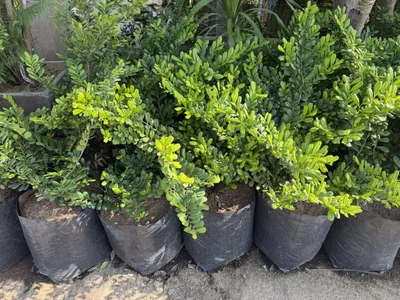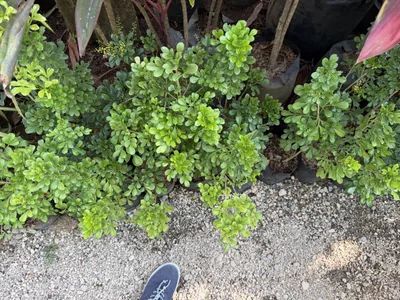
Santan
Ixora coccinea
Also known as: Ixora, Jungle Flame, Flame of the Woods, Jungle Geranium
The year-round flowering shrub every Filipino grew up with: the flower you pull apart to sip nectar from, blooming outside barangay halls and in gardens nationwide. Clusters of small star-shaped flowers in red, orange, yellow, pink, and white. Dwarf varieties stay knee-high for borders; standard varieties build into flowering hedges. Blooms almost continuously in full sun with very little fuss. ₱120 to ₱380 per plant, colour subject to nursery stock.
Pricing Guide (per plant)
| Size / Spec | Price (PHP) |
|---|---|
| 1 ft | ₱120 |
| 1.5-2 ft | ₱240 |
| 3 ft | ₱380 |
Volume Discounts
- 50+ plants:Volume pricing on border runs and mass plantings, quoted per project
Plant material only, by colour and subject to nursery stock. Colour availability shifts constantly: red is almost always available, while yellow, pink, and white move in and out of supply, so confirm colour before you commit to a design that depends on it. Border runs and mass plantings are quoted per project. Soil preparation and planting are extra.
Request Project Quote →About Santan
Every Filipino knows santan. It is the flower kids pull apart to sip nectar from, the reliable splash of red outside the barangay hall, the shrub blooming in gardens from Aparri to Jolo. Few plants flower this consistently in our heat with this little fuss. 'Santan' covers several species and countless cultivars in the genus Ixora (family Rubiaceae), but the name usually points to Ixora coccinea, the classic red santan. Flowers come in crimson red, orange, yellow, pink, cream, and white, and dwarf cultivars stay under 3 ft while standards build into flowering hedges. Here is the part most listings skip: santan feels quintessentially Filipino, but the garden varieties everyone plants are not Philippine natives. The common red santan is native to mainland South and Southeast Asia and is recorded as introduced in the Philippines. The genuinely native santans, Ixora philippinensis and I. palawanensis, grow wild in our forests but are barely in the ornamental trade.
Common Applications
- Low flowering borders. Dwarf santan along walkways and driveways, planted 30 cm on-center for a continuous band of colour.
- Flowering hedges and mass planting. Standard santan tolerates hard pruning, so it works as a formal low hedge that still flowers.
- Colour blocks. Commercial and subdivision landscaping where a block of reliable colour is needed year-round.
- Butterfly and pollinator gardens. The nectar draws butterflies all day. It is also the childhood nectar flower that everyone here remembers.
- Poolside and patio containers. Compact cultivars are container-friendly, low-litter, and hold their colour in full sun.
- Barangay, school, and public planting. Cheap, tough, and flowers with almost no maintenance, which is why it is everywhere in public planting.
Where You'll See It
- Barangay halls, schools, and public grounds
- Subdivision borders and walkway edges
- Commercial and mall landscaping colour blocks
- Residential gardens nationwide
- Poolside and patio containers
- Butterfly and pollinator gardens
Why Architects Choose It
- Flowers nearly year-round in full sun, which very few shrubs do here
- Cheap enough for mass planting and colour blocks at scale
- Available in red, orange, yellow, pink, cream, and white for colour-matched schemes
- Dwarf and standard forms cover both low borders and flowering hedges
- Tolerates hard pruning, so it holds a formal low hedge
- Genuinely low-maintenance and heat-proof, with strong pollinator value
Project Types Best Suited
- Subdivision and commercial border planting
- Mass planting and colour blocks
- Public, school, and barangay landscaping
- Residential gardens and flowering hedges
- Butterfly and pollinator gardens
- Poolside and container planting
Specifications
- Botanical name
- Ixora coccinea L. (and other Ixora species and cultivars)
- Family
- Rubiaceae (coffee family)
- PH trade names
- Santan; santan puti (Ixora finlaysoniana); santan-tsina (Ixora chinensis)
- Native range (of I. coccinea)
- India and Bhutan through Bangladesh, Myanmar, Thailand, Cambodia, and Vietnam
- Status in PH
- Introduced. Kew's World Checklist records Ixora coccinea in the Philippines as introduced, not native
- PH-native relatives
- Ixora philippinensis Merr. and Ixora palawanensis Merr. Both genuinely native, both rare in the ornamental trade
- Habit
- Compact, much-branched evergreen shrub; tolerates hard pruning
- Height
- Dwarf cultivars under 3 ft; standard varieties to 2-2.5 m
- Flowers
- Dense clusters of small tubular star-shaped blooms in red, orange, yellow, pink, cream, and white
- Bloom
- Near-continuous year-round in warm climates, given enough sun
- Sun
- Full sun (6+ hours) for best bloom. Tolerates partial shade, but with far fewer flowers
- Water
- Moderate. Let the topsoil dry slightly between waterings
- Soil
- Slightly acidic and well-drained. Yellows with iron chlorosis in alkaline soil
- Feeding
- Balanced fertilizer every 2-3 months. Avoid heavy nitrogen, which gives leaves instead of flowers
- Spacing
- Dwarf 30 cm on-center for borders; standard 45-60 cm for hedges
- Pollinators
- Draws butterflies all day. The classic Filipino childhood nectar flower
- Pet safe
- Yes. The ASPCA lists Ixora coccinea (as 'Iron Tree') as non-toxic to both dogs and cats. One of the few plants in our catalog with an actual authority behind the claim
- Pool safe
- Yes. Compact, low-litter, container-friendly
Santan (Ixora) Supplier in the Philippines
Every Filipino knows santan. It is the flower kids pull apart to sip the nectar from, the reliable splash of red outside the barangay hall, the shrub blooming in gardens from Aparri to Jolo. Few plants flower this consistently in our heat with this little fuss.
“Santan” covers several species and countless cultivars in the genus Ixora (family Rubiaceae), but the name usually points to Ixora coccinea, the classic red santan. Flowers come in crimson red, orange, yellow, pink, cream, and white. Dwarf cultivars stay under 3 ft for borders; standards build into flowering hedges.
We supply it at ₱120 to ₱380 per plant, colour subject to nursery stock.
The Honest Truth About “Filipino” Santan
Here is the part most listings skip.
Santan feels quintessentially Filipino. It is in the childhood memory of almost everyone who grew up here. But the garden varieties everyone actually plants are not Philippine natives:
- Red santan (Ixora coccinea), the common one, is native to mainland South and Southeast Asia: India and Bhutan through Bangladesh, Myanmar, Thailand, Cambodia, and Vietnam. Kew’s World Checklist records it in the Philippines as introduced.1
- “Santan puti” (Ixora finlaysoniana) is Thai.
- “Santan-tsina” (Ixora chinensis) is, as the name openly admits, Chinese.2
Meanwhile the genuinely Philippine-native santans, Ixora philippinensis and I. palawanensis, grow wild in our forests and are barely in the ornamental trade at all.12
So santan is naturalized in Filipino garden culture, deeply and completely, even though the specific plants came from somewhere else. Both things are true, and neither one needs to be pretended away.
If a brief calls for a true native santan, that is Ixora philippinensis, and we can source it separately on request. Ask for it explicitly, because it is not what comes off the rack.
Common Applications
- Low flowering borders along walkways and driveways (dwarf santan, 30 cm on-center).
- Flowering hedges and mass plantings (standard santan). It tolerates hard pruning, so it holds a formal low hedge that still flowers.
- Colour blocks in commercial and subdivision landscaping.
- Butterfly and pollinator gardens. The nectar draws butterflies all day.
- Poolside and patio containers (compact cultivars).
Growing Conditions in the Philippines
- Sun: full sun, 6+ hours. This is the whole ballgame. Shade gives you leaves and almost no flowers.
- Water: moderate. Let the topsoil dry slightly between waterings.
- Soil: slightly acidic and well-draining. In alkaline soil santan yellows with iron chlorosis; correct it with chelated iron and compost.
- Feeding: a balanced fertilizer every 2-3 months keeps blooms coming. Avoid over-feeding nitrogen, which gives you all leaves and no flowers.
- Trimming: shear lightly after each flowering flush to keep the shape tight and trigger the next round of buds.
- Spacing: dwarf 30 cm on-center for borders; standard 45-60 cm for hedges.
Santan Is Genuinely Pet-Safe (And That Is Rare Here)
Most plant listings either ignore pets or make a vague reassuring noise. This one has an actual authority behind it: the ASPCA lists Ixora coccinea (under the name “Iron Tree”, also “Flame of the Woods”) as non-toxic to both dogs and cats.3
That matters more than it sounds, because a lot of the tropical palette is not:
- Ti plant is ASPCA-listed as toxic to cats and dogs (saponins).
- Heliconia has never been assessed by the ASPCA, so nobody can honestly call it safe.
- Croton, monstera, and kalachuchi are all on the toxic side too.
So if a client has a leaf-chewing dog or a curious cat, santan is the flowering shrub we point at first. It is cheap, it flowers year-round, and it is the one where the pet answer is a documented yes rather than a shrug.
How to Confirm What You Are Buying
| Question | What to check |
|---|---|
| Dwarf or standard? | Dwarf stays under ~3 ft with smaller leaves and clusters (borders). Standard reaches 2-2.5 m with larger clusters (hedges, mass planting). |
| Which red is it? | ”Red santan” is applied loosely across cultivars. Confirm by cultivar and habit, not by the label on the pot. |
| Garden or true native? | If native is the point, ask specifically for Ixora philippinensis. It is a different, scarcer plant, and it is not what sits on the standard rack. |
The practical trap: dwarf planted at hedge spacing never closes, and standard planted at border spacing becomes a thicket. Decide which form you are buying before you decide the spacing.
Pricing
Plant material only, by colour and subject to nursery stock:
| Size | Price |
|---|---|
| 1 ft | ₱120 |
| 1.5-2 ft | ₱240 |
| 3 ft | ₱380 |
Colour availability shifts with nursery production. Red is almost always available; yellow, pink, and white move in and out of supply, so confirm colour before committing to a design that depends on it. Border runs and mass plantings are quoted per project.
Care Highlights
- Sun: 6+ hours, or it will not flower. Everything else is secondary.
- Feeding: balanced fertilizer every 2-3 months; go light on nitrogen.
- Yellow leaves: green veins with yellow tissue means iron chlorosis from alkaline soil, not thirst.
- Trimming: shear after each flush, not before one.
- Companions: works well massed against croton foliage or as a flowering front to a cinamomo boundary run.
Sources
Footnotes
-
World Checklist of Vascular Plants (WCVP), Royal Botanic Gardens, Kew, the dataset behind Plants of the World Online. Ixora coccinea L., accepted; native range across mainland South and Southeast Asia (India, Bhutan, Bangladesh, Myanmar, Thailand, Cambodia, Vietnam), with the Philippines recorded as introduced. Ixora philippinensis Merr. and Ixora palawanensis Merr. both accepted, with I. philippinensis native to the Philippines. Accessed 2026. https://powo.science.kew.org/taxon/urn:lsid:ipni.org:names:753844-1 ↩ ↩2
-
StuartXchange, Philippine Medicinal Plants: “Santan / Ixora coccinea” and “Santan-tsina / Ixora chinensis.” Notes the ~500-species genus, the many colour and size cultivars including dwarfs under 3 ft, santan puti (I. finlaysoniana), and the native I. philippinensis. Accessed 2026. https://www.stuartxchange.org/Santan.html ↩ ↩2
-
ASPCA, Toxic and Non-Toxic Plants list, “Iron Tree (Ixora coccinea),” additional common names Maui Sunset and Flame of the Woods. Non-toxic to dogs and non-toxic to cats. Toxic principles: non-toxic. Accessed 2026. https://www.aspca.org/pet-care/animal-poison-control/toxic-and-non-toxic-plants/iron-tree ↩
We plant and install this
Halamanan supplies and installs Santan as part of our landscape design and landscape construction projects. We source the plants, place them in the design, and plant them with the rest of the garden.
Sourcing & Supply
Origin
Sourced from Luzon growers by colour and size, from dwarf border stock through standard hedge stock.
Supplier Relationship
Working relationships with multiple flowering-shrub growers. Colour availability shifts with nursery production cycles rather than with demand, which is why a colour that was everywhere last quarter can be short this one.
Quality Control
Colour and size are matched on border and mass-planting runs so blocks read evenly, since a colour block with three shades of red in it reads as a mistake. We confirm colour against actual stock rather than against a catalogue, because 'red santan' is applied loosely across cultivars. True-native Ixora philippinensis can be sourced separately on request, subject to availability.
Frequently Asked Questions
What is santan?
Santan is the Filipino name for Ixora, a genus of tropical flowering shrubs in the coffee family (Rubiaceae), with dense clusters of small star-shaped flowers. The most common garden santan is the red Ixora coccinea. It blooms nearly year-round in full sun and is one of the most familiar flowering shrubs in the Philippines.
Is santan native to the Philippines?
Not the garden varieties. Kew's World Checklist of Vascular Plants records the common red santan (Ixora coccinea) as introduced in the Philippines: its native range runs from India and Bhutan through Bangladesh, Myanmar, Thailand, Cambodia, and Vietnam. The white 'santan puti' (I. finlaysoniana) and 'santan-tsina' (I. chinensis) are likewise imports. The Philippines does have true native santans, Ixora philippinensis and Ixora palawanensis, but they are barely sold in the ornamental trade. Santan is culturally Filipino even though the popular plants came from elsewhere.
Why is my santan not flowering?
Almost always too little sun. Santan needs 6+ hours of direct sunlight to bloom well, and in heavy shade it will happily grow leaves and produce almost nothing. The other usual causes are over-trimming right before a bloom cycle and too much nitrogen fertilizer, which pushes foliage at the expense of flowers.
Why are my santan leaves turning yellow?
Yellow leaves with green veins usually mean iron deficiency caused by alkaline soil, not underwatering. Apply chelated iron, and acidify the soil over time with compost and sulfur-based amendments. Santan wants slightly acidic, well-drained soil.
What is the difference between dwarf santan and regular santan?
Dwarf santan stays compact under about 3 ft with smaller leaves and flower clusters, which makes it the right choice for borders and mass planting. Standard santan grows to around 2-2.5 m with larger clusters, better for hedges and feature planting. If you want a low band of colour along a walkway, dwarf; if you want a flowering hedge, standard.
Can santan be used as a hedge?
Yes. It is much-branched and tolerates hard pruning, so it works as a formal low flowering hedge. The trade-off is that it flowers most freely when it is not sheared too tightly, so a very crisp hedge will bloom less than a loose one. Use standard varieties for hedging, not dwarf.
Is santan safe for pets?
Yes, and this one has an actual authority behind it rather than a guess. The ASPCA lists Ixora coccinea, under the name 'Iron Tree', as non-toxic to both dogs and cats. That makes santan the plant we point to when a client has a leaf-chewing dog or a curious cat, because several popular tropical shrubs are not safe: ti plant is ASPCA-listed as toxic to both, and heliconia has never been assessed either way.
Is santan good for pollinators?
Very. The flowers draw butterflies all day long, and generations of Filipino kids have pulled the blooms apart to sip the nectar at the base. It is a solid, cheap choice for butterfly and pollinator gardens.
Can I get the true native Philippine santan?
Sometimes, on request. The native santans are Ixora philippinensis and Ixora palawanensis, and they are genuinely Philippine, but they are barely in the ornamental trade so they are not something you pick off a nursery rack. If a brief calls for a native santan, tell us up front: we can source Ixora philippinensis separately, subject to availability, and we will be honest if it is not obtainable in the quantity or size you need.